
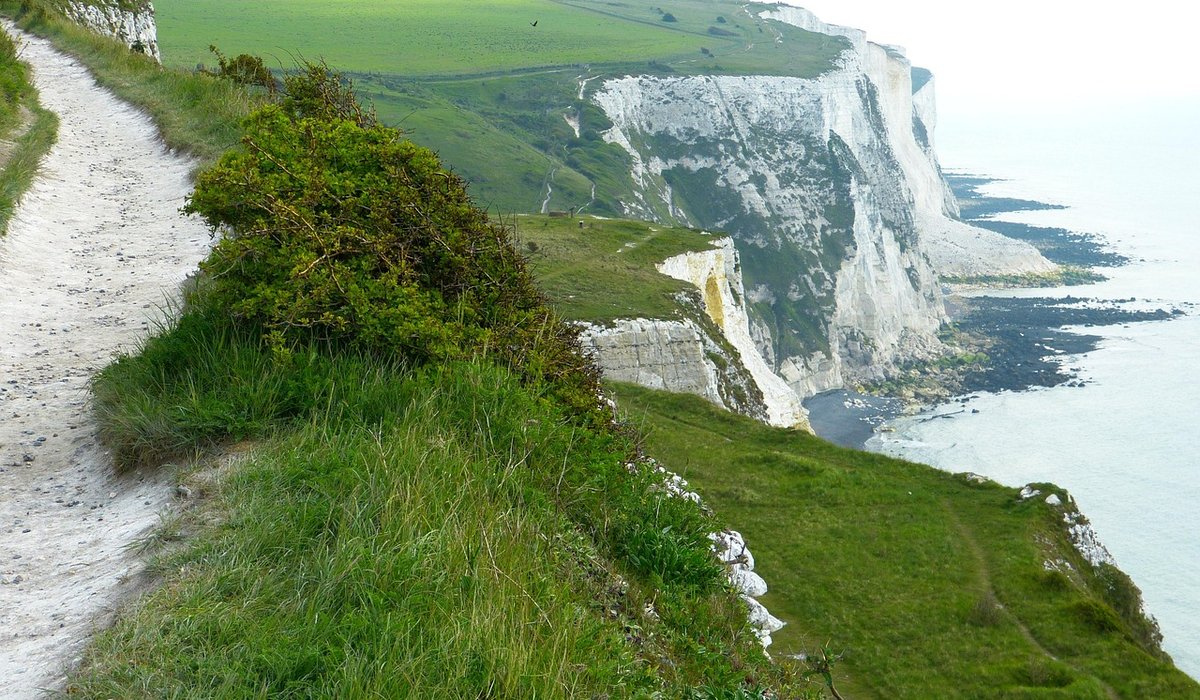
Finding the Best Harbour Viewpoints for Sketching and Photography
Why the High Ground Wins
Stand on a harbour quay and you see a harbour. Climb fifty feet and you see a town, a coastline and a weather system all at once. That shift in altitude is what turns a pleasant snapshot into a picture someone wants to keep. From above, moored boats stop being isolated objects and become a pattern — hulls angled one way on the ebb, another on the flood, masts ticking back and forth like a metronome. The harbour wall draws a clean curve. Rooflines step down to the water. You can see where the light will fall in twenty minutes and position yourself accordingly.
The best viewpoints tend to be the ones that already exist: church towers, ruined forts, headland paths and the tops of old defensive walls. They were built for watching the sea, and they still do the job beautifully.
Church Towers, Cliff Paths and Quiet Churchyards
Coastal churches were often sited on the highest ground available, which means their towers and churchyards frequently offer the finest free view in town. Whitby's St Mary's, reached by the famous steps, looks straight down the harbour to the piers. St Ia's above St Ives gives you the whole sweep of the bay. In Mousehole, the climb up behind the village rewards you with rooftops, luggers and Mount's Bay beyond.
Practicalities matter here. Many towers open only on selected summer afternoons, run by volunteers, with a small donation expected and a steep, narrow spiral to negotiate with a bag. Churchyards, by contrast, are almost always open and usually empty at the hours photographers care about — but they are working spaces, not viewpoints with a car park.
- Check tower opening times before you build a trip around one; they change with the season.
- Never set up in a gateway or across a grave; keep to paths and grass edges.
- Ask before using a tripod inside a church, and avoid service times entirely.
- Cliff paths give similar height with none of the etiquette — but check the forecast and tell someone your route.
Forts, Castles and Harbour Walls
Britain's coastal defences are a gift to anyone with a sketchbook. Scarborough Castle's headland splits the town's two bays and gives you a north-facing and a south-facing view within a hundred yards. Dartmouth Castle sits right at the mouth of the Dart, framing the river, the castle and the open sea in a single composition. Tenby's castle hill looks down on the harbour, the lifeboat station and Caldey Island. In Cornwall, St Catherine's Castle above Fowey does the same job with a fraction of the crowd.
Further north, Dunstanburgh's ruined keep above Craster offers a long view back along the harbour and out to the Farne Islands, and McCaig's Tower in Oban sits like a coliseum above the bay, giving you the whole arc of Kerrera and the Sound of Mull.
Don't overlook harbour walls themselves. Brixham's breakwater, the pier at Whitby and the long arm at Holyhead all give you a low, symmetrical view back at the town — useful when the elevated shot feels too detached.
Working With Tide and Light
Tide state changes a composition more than most photographers expect. High water gives you reflections, boats floating at their moorings and a clean line where wall meets sea. Low water reveals mud, ladder rungs, stranded dinghies leaning on their sides and a whole texture of weed and stone that makes a much more interesting foreground. Check a tide table the night before and decide which you actually want.
Light behaves predictably once you know your bearings. East-facing harbours are best in the morning, when mist often sits on the water and the town is still quiet. West-facing ones come alive in the afternoon and glow for the last hour before sunset. The twenty minutes after sunset — the blue hour — is when harbour lights come on and the water turns to brushed metal. Flat, overcast days are the sketchbook's best friend, because the shadows stop moving and you can work slowly without the scene rearranging itself.
Practical Kit, Comfort and Courtesy
- Sketching: an A5 or A4 book, a board, bulldog clips and a soft pencil or two. Wind is the real enemy on headlands, so weight everything down.
- Photography: a polarising filter cuts glare and restores the colour of the water. A neutral density filter lets you smooth ripples into something calmer. A tripod with a hook underneath takes a bag for stability.
- Comfort: layers, a windproof outer shell and something to sit on. Coastal air is colder than the car park suggests.
- Safety: check tide times before walking below cliffs, and never turn your back on a rising sea to frame a shot.
- Courtesy: shut gates, keep dogs close, don't block slipways used by fishing boats, and step aside for anyone working the harbour.
Six Spots Worth the Climb
- St Mary's Churchyard and the abbey steps, Whitby — harbour, piers and the whole sweep of the Esk.
- Scarborough Castle headland — two bays, one afternoon.
- St Catherine's Castle, Fowey — the harbour mouth without the crowds.
- Tenby castle hill — boats, beach and Caldey in one frame.
- McCaig's Tower, Oban — a stone circle framing the bay.
- Dunstanburgh Castle above Craster — ruins, harbour and a big Northumbrian sky.
Take your time at each. Sit for twenty minutes before you open the book or raise the camera, and let the light show you what it intends to do. The view doesn't change much; the way it looks does, constantly.
tag: Harbour Towns

Eleanor Whitcombe Author
Explore how small ports once linked coal, grain and slate across rough seas, leaving behind quays, warehouses and family stories.
YOU MAY ALSO LIKE
Tracing the Lost Trade Routes of Britain's Coastal Shipping
Sep 3
10Discover the cramped quarters, salted rations and strict routines that shaped ordinary sailors on short but dangerous coastal runs.
read more
Life Below Decks on a Victorian Coastal Cargo Ship
Sep 1
10Learn about Roman wooden pilings, medieval stone moles and traditional breakwaters that still shelter boats along exposed coasts.
read moreCoastal Walks
-

ERRIC CATONA
A beginner-friendly guide to reading wind shifts, launching safely and practising basic tacks without leaving calm, forgiving waters.
May 19, 2016 at 5.12 pm
Reply
ERRIC CATONA
Check tide tables, wind against water and local hazards to plan a comfortable passage and avoid uncomfortable choppy conditions.
May 19, 2016 at 5.12 pm
Reply -
ERRIC CATONA
Master the bowline, clove hitch and round turn with two half hitches for secure mooring, fender tying and safe rope work.
May 19, 2016 at 5.12 pm
Reply
Harbour Towns
Your email address will not be published.